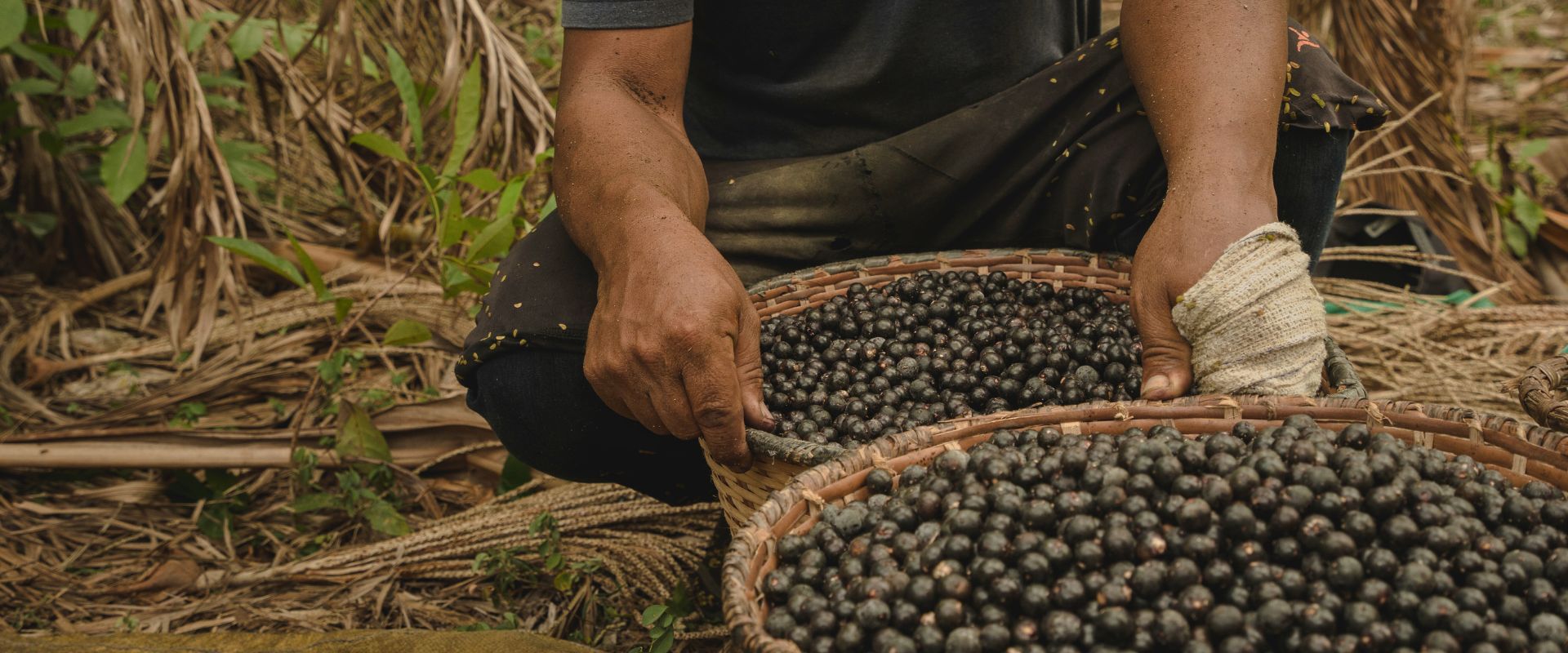
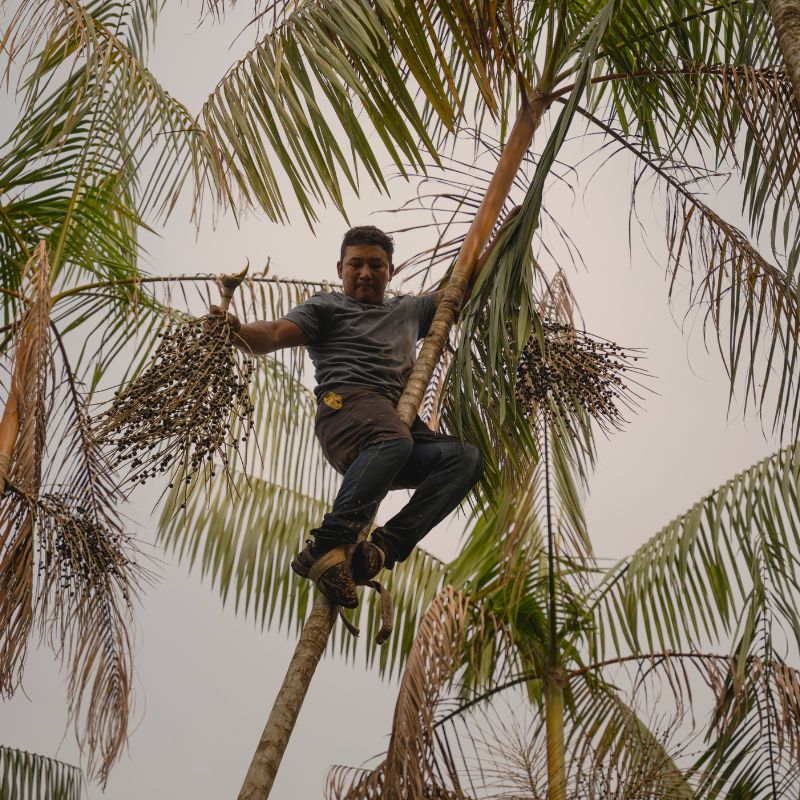
Traditional açaí cultivation supports more than 300 thousand people and moves around 3 billion reais per year, mainly in Pará, which accounts for 94 % of national production.
This agroextractivist model contributes to the local economy, keeps the forest standing, and reinforces the cultural identity of riverside communities.
The technique of sustainable management of native açaí palm groves, promoted by Embrapa and projects such as Bem Diverso and Sustenta e Inova, increased productivity from 1 t per year to up to 6 t year maintaining biodiversity.
This result strengthened local income and made harvesting safer for producers and the forest.
Sustainable income = preserved forest
According to the Sindfrutas, the increase in production transformed the production chain: today the açaí palms are cultivated with management, and 118 industries in Pará depend on the production of riverside dwellers, benefiting around 5 thousand families per companyThis ecosystem generates jobs not only in agriculture, but also for boatmen, porters, and cooperatives.
While many projects have led to açaí monoculture — which poses a risk to biodiversity — initiatives such as minimum impact management preserve forest diversity, maintaining other species typical of floodplain forests and the functioning of local ecosystems.
Education, culture and local protagonism
THE Amazonbai Cooperative, in Amapá, directs 5 % of açaí production directly to agroecological schools in the community. Today, children of producers are achieving higher education and graduating as doctors or engineers, the result of a generation growing up with autonomy and hope.
Furthermore, environmental fairs in riverside communities strengthen local self-esteem, promote knowledge exchange, agroecological management, and crafts with biojewels and traditional culture.