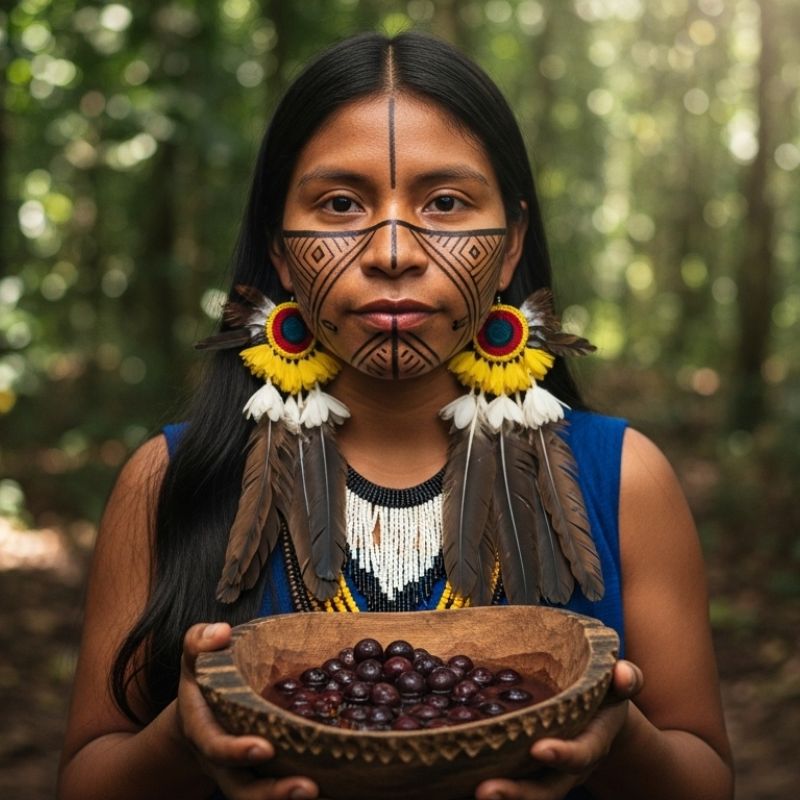
According to indigenous folklore, a Tupi tribe living in what is now Belém, Pará, faced a severe food shortage. In the midst of the crisis, the chief Itaki ordered that all babies born be sacrificed to contain population growth. Even his granddaughter, his daughter's daughter Iaçã, was not spared.
Desolate, Iaçã cried out to Tupã, god of thunder, for a solution. One night, she heard a child crying in the forest, followed it to a palm tree, and found her baby, who quickly disappeared. At dawn, she was found dead at the foot of the same tree, her expression serene. Her eyes were fixed on the dark fruit above.
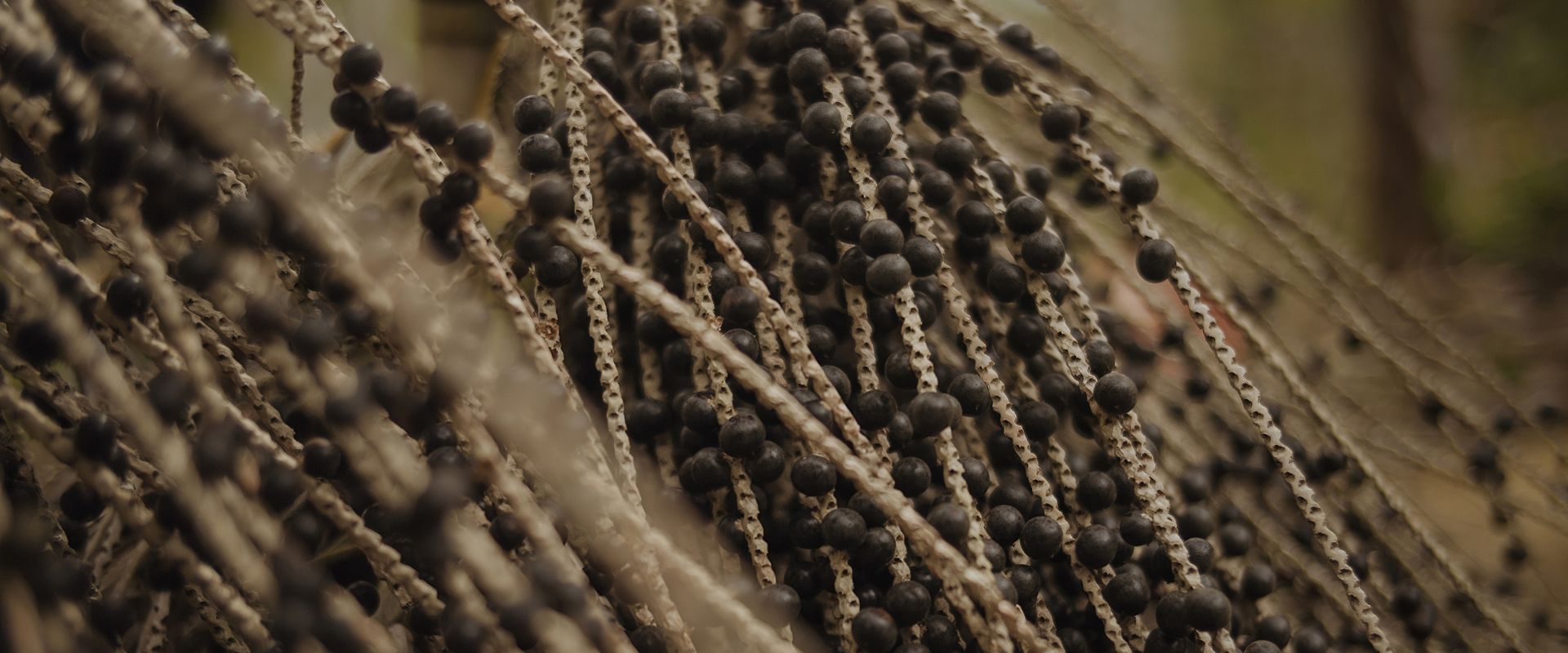
The palm tree was laden with black berries that revealed a thick, nutritious juice. Understanding the gift Tupã was offering them, the chief suspended the sacrifices and named the fruit "açaí", a tribute to Iaçã, inverting her name in the Tupi-Guarani language, which means “fruit that cries” or “fruit that expels water”
From the forest to the world
The strength of the riverside diet
THE açaí (Euterpe oleracea) It has been consumed for centuries by Indigenous and riverine peoples of the Amazon as a staple food. Often consumed as a thick juice or a savory mush with flour and fish, it was a central part of the daily meal: "Without açaí, we'll still be hungry" was a common mantra among the region's riverine people.
Expansion within Brazil
Until the 1980s, its consumption was restricted to the North, especially Pará. Starting in the following decade, with the appreciation for healthier foods, the fruit began to appear in Rio de Janeiro, São Paulo, and other regions, often in the form of açaí bowls with granola, banana, and guarana, beach-bar style.
The global journey
Around 2000, Brazilian entrepreneurs began exporting frozen açaí to the US. It quickly became a "superfruit," promoted by celebrities like Oprah and medical experts. Brands like Sambazon emerged, associating açaí with energy, antioxidants, and a healthy diet, although some marketing practices were challenged for exaggerating health claims.
Today, more than 95 % of açaí consumed in the world comes from Pará, Brazil produces more than 1 million tons per year, and its export has grown exponentially, especially in the USA, Japan, Europe and Australia